The Invisible Powerhouse: Why PVC is King in Wires and Cables
APPLICATIONS
Shreyansh
11/19/20251 min read
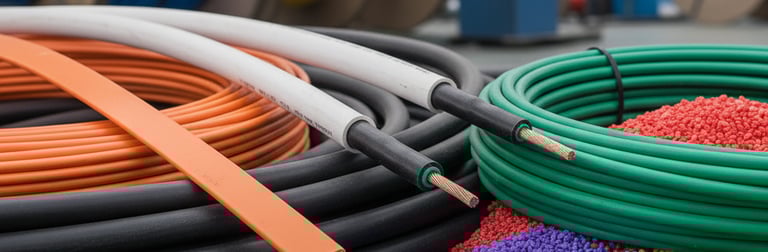
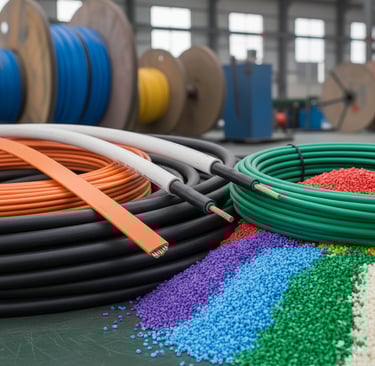
PVC (Polyvinyl Chloride) compound is the unsung hero of the electrical world. Its unique blend of properties makes it the default material for insulating and sheathing the vast network of wires and cables that power our homes, offices, and industries.
The Essential Properties of PVC Compounds
Standard PVC compounds are highly customized formulations designed to meet stringent safety and performance standards. For cables and wires, the following properties are paramount:
⚡ Excellent Electrical Insulation: PVC's high dielectric strength effectively prevents current leakage, making it safe and reliable for low- to medium-voltage applications (up to $10 \text{ kV}$).
🔥 Inherent Flame Retardancy: Due to its high chlorine content, PVC is naturally self-extinguishing. Specialized Flame Retardant Low Smoke (FRLS) compounds are a key development, offering enhanced fire safety in buildings and critical infrastructure.
🛠️ Durability and Resistance: PVC sheathing provides tough, resilient protection against abrasion, moisture, chemicals, and UV radiation, ensuring a long service life for both indoor and outdoor cables.
💰 Cost-Effectiveness: PVC is generally more affordable than alternative materials, providing a high-performance, cost-effective solution for mass production.
The Future is Custom-Engineered
From building wires to automotive wiring harnesses and specialized industrial cables, PVC compounds are continuously being refined. Manufacturers can adjust the formulation (using different plasticizers, stabilizers, and fillers) to create compounds with specific characteristics like:
High-temperature resistance
Superior flexibility for robot and drag chain cables
Low-smoke and low-toxicity properties for enclosed spaces like subways and data centers.
PVC remains an "invisible powerhouse," guaranteeing the safety and efficiency of global power transmission.